
Men, the Menopause & Why We Should Understand It
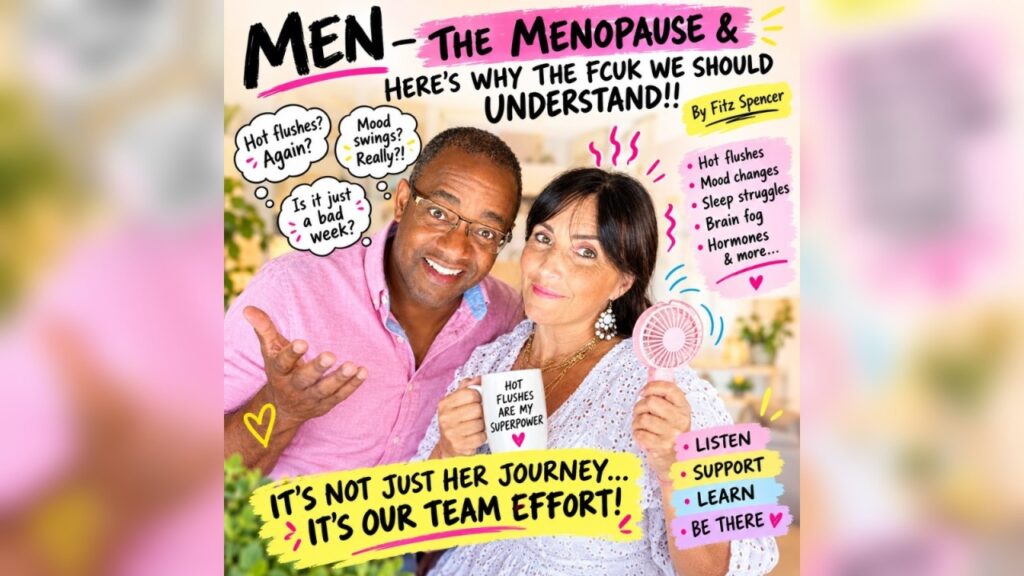
World Menopause Day came and went. Most men didn’t notice. Here’s why we should have.
I’m not a doctor, just a husband who adores his wife (full stop). That’s It!!! And that should be good enough for us men to know, but it ain’t.
Sunday 18th October was World Menopause Day, and for most people it passed without a second thought. No cards, no conversations, barely a mention.
I’m not someone who normally shouts about this sort of thing. I’ve spent forty years in hospitality; I’ve run bars and restaurants, and I’ve seen most of what life can throw at people. But nothing prepared me for watching my amazing wife go through one of the biggest shifts a woman’s body and mind will ever face. And I’ll be honest: for a while, I didn’t get it.
That’s why I’m writing this. Because it’s bloody important that men understand what’s going on. Not just tolerate it. Not roll our eyes at it. Understand it.
This isn’t a niche issue.
Let’s start with the scale of it.
Around 13 million women in the UK are currently going through perimenopause or menopause, roughly one third of the female population. That’s wives, partners, mums, sisters, colleagues and friends. If you know a woman, you know someone affected.
 In the UK, the average age for a woman to reach the menopause is 51, but around 1 in 100 women experience it before the age of 40. And here’s the bit most men don’t know: it doesn’t arrive overnight. Symptoms usually start months or years before periods stop, and this stage is called perimenopause.
Some symptoms, such as joint pain and vaginal dryness, can continue after menopause too.
So if you’re thinking “this’ll be over in a few weeks”, think again. This is a long road, and she needs you walking it with her.
What’s actually happening:
During this time, hormones (oestrogen, progesterone and testosterone) fluctuate and then decline. These hormones don’t just control periods. They affect sleep, mood, energy, confidence, skin, hair, joints, memory, and much more. When they shift, everything shifts.
Here’s what that can look like in your house:
- A lower sex drive. This is the one men take personally, so let me be blunt. It doesn’t mean she doesn’t love you. It doesn’t mean there’s someone else. Some women notice a change in their sex drive, and for some, less lubrication can mean sex becomes painful. Her body is changing. Don’t make it about you, as most of us do.
- Hair loss and thinning, which can knock her confidence hard, doesn’t need us men making a joke of it.
- Weight gain and a changing body shape, often around the middle, even when nothing about her diet or routine has changed. Again, telling her to go to the gym or a diet believe me gents wrong bloody move.
- Mood swings, anxiety, and irritability that can come out of nowhere, for her as much as for you.
- Hot flushes and night sweats, which mean broken sleep, which means exhaustion the next day.
- Brain fog, losing words, forgetting why she walked into a room. It’s frightening when you don’t know why it’s happening.
- Energy crashes, where an ordinary day feels like wading through mud.
- Aches, pains, headaches, and palpitations.
- Changes in appetite.
- Shattered self-esteem. She may not feel like herself, and she may not recognise the woman in the mirror.
Men, the list goes on.
Not every woman experiences all these symptoms. Some have relatively few; others find them disruptive to daily life. That distinction matters. We shouldn’t assume we know what she’s going through just because we’ve read a list.
We need to listen to the woman in front of us.
If she’s quieter than usual, don’t immediately assume she’s angry with you. If her sex drive changes, don’t make it a verdict on your relationship. If she feels uncomfortable about changes in her body, telling her to go to the gym or eat less may be the last thing she needs to hear.
There may be a time for practical solutions. But start by understanding the problem from her point of view.
The part we must take seriously 👇🏽
Menopause can affect emotional wellbeing, confidence, relationships and quality of life. Anxiety, persistent low mood and feeling overwhelmed should not be dismissed as someone simply being hormonal.
There is also a wider mental-health conversation we mustn’t ignore: The Office for National Statistics data for England and Wales recorded the highest female age-specific suicide rate among women aged 50–54 in 2023. That statistic does not establish that menopause causes suicide, but it is a reminder that distress in midlife deserves to be taken seriously.
If your partner is struggling, listen without judgement and encourage her to seek appropriate support. A GP can discuss symptoms and treatment options. If she is in immediate danger, seek emergency help.
Sometimes the most loving thing you can do is recognise that you are not qualified to solve everything yourself.

So, what can we do?
First, shut the fuck up and listen to her. Then remember this: it’s not about you; it’s about her.
Here’s what I’ve learnt on our journey:
- Educate yourself. Don’t make her explain every symptom to you while she’s living through it. Read up. I’ve put some good places to start at the bottom of this article.
- Listen without trying to fix. Men default to problem-solving. But as one men’s guide puts it, perimenopause isn’t faulty appliance. Most of the time she needs to be heard, not handed a solution.
- Don’t take it personally. A short temper, a quiet evening or a cancelled plan isn’t a verdict on your relationship.
- Ask, don’t assume. “What would help today?” is one of the most powerful questions you can ask. The answer might change day to day, and that’s fine.
- Pick up more of the load. Cook, clean, do the school run, handle the bills and the life admin. When she’s running on empty, lightening her day is a real act of love.
- Help her sleep. A cooler bedroom, a fan, lighter bedding, separate duvets if needed. Sleep makes everything else more manageable.
- Keep showing affection, without pressure. A hug, holding hands, a genuine compliment, with no expectation attached. Intimacy is about more than sex.
- Back her at the GP. Help her keep a diary of symptoms so nothing gets missed. Offer to go with her if she wants you there. Too many women are told “it’s just your age” and sent home. Support her in being taken seriously.
- Get moving together. One thing that consistently helps, whatever the symptoms, age or fitness level, is movement. Walks, fresh air, time outdoors. It’s good for her, good for you, and it’s time spent together.
- Look at food and lifestyle as a team. Cut back on alcohol together, eat well together. Don’t leave her to make all the changes alone.
- Watch your words. Jokes about “the change” or “hormonal women” aren’t funny to someone living it. Call it out when mates do it too.
- Remind her who she is. When her confidence dips, tell her what you see in her. Mean it. This was a personal thing of mind as I adore my wife but didn’t notice the weight gain until looking at phones, but of course my wife Zoe knew but probably thought I was being protective and encouraging.
- Look after yourself too. You can’t support anyone on an empty tank. Talk to a mate, get outdoors, and be honest if you’re struggling to understand.
- Be patient for the long haul. This isn’t a few bad weeks. It can last years. Stay steady.
Our story: managing, not fixing
For us, part of the journey was my wife choosing to try the Zinzino Health Protocol Plus rather than going down the HRT route. That was her decision, made after looking at her options, and it has worked wonders for her. I’m not making any medical claims here. HRT is the right answer for a great many women, and it remains the main treatment for menopausal symptoms, so every woman should talk to her doctor about what suits her. What worked for us won’t be right for everyone.
But here’s the biggest lesson I’ve learnt:
Menopause isn’t something you can fix; you can’t, so stop trying. It’s something you manage, together.
And the most important part of managing it isn’t a pill, a powder, or a plan. It is support.
Guys Where to learn more
If you do one thing after reading this, pick a link below and spend ten minutes on it tonight:
- NHS: Menopause and perimenopause. The plain-English starting point on symptoms and treatments: nhs.uk/conditions/menopause
- Dr Louise Newson: A guide for partners. Written specifically for partners, covering what’s happening and how it can affect your relationship: drlouisenewson.co.uk/knowledge/perimenopause-and-menopause-a-guide-for-partners (the free balance app is also worth a look)
- Menopause Support: Understanding Menopause for Men. Diane Danzebrink’s straight-talking guide for blokes: menopausesupport.co.uk/?p=1700
- Men’s Fitness: Men and the menopause. An article from the authors of Burning Up, Frozen Out, a book written as a playbook for men: mensfitness.co.uk/features/men-and-the-menopause
- NICE guidance NG23. The official UK clinical guidance on menopause, useful if you want to know what she should be offered by her GP: nice.org.uk/guidance/ng23
- The Menopause Charity and Menopause Matters. Two well-respected UK sources with evidence-based information for women and their families.
So, men, next World Menopause Day, let’s not let it go unnoticed. Better still, let’s not wait a whole year. Start the conversation at home tonight and stop think it will go away if you love your wife understand listen and work with it together, as she puts up with your blood moods.
